On Monday, July 21st and Wednesday, July 23rd, 2025,Research, development and dissemination of educational approaches that overcome the cycle of poverty, inequality and abuseAs part of the "Trauma-Informed Schools" project, we held an "intellectual collaboration" meeting (*1) on the theme of "Trauma-Informed Schools" in the United States.
(*1) The "Intellectual Collaboration" group is a research group held by the Kyoto University Graduate School of Education, Educational Practice Collaboration Center, for those involved with the university and those introduced by them. For details, please seeHerePlease see this article.65thThis is to report on the event.
(This link will take you to the website of the Kyoto University Graduate School of Education, Collaboration Center for Educational Practice)
A "trauma-informed school" is a school that takes into consideration the various traumas that children may experience.
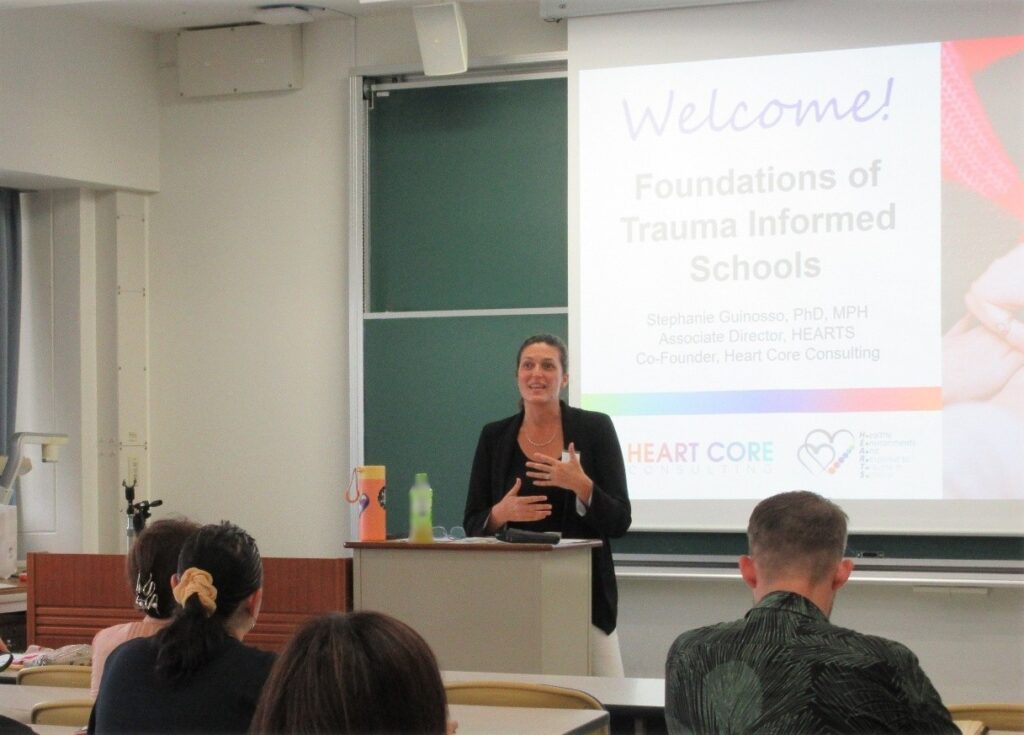
This time, we invited Stephanie Guinosso, a member of HEARTS (Healthy Environments and Response to Trauma in Schools), which is working to promote "trauma-informed schools" in the United States, to give a lecture and hold a workshop.
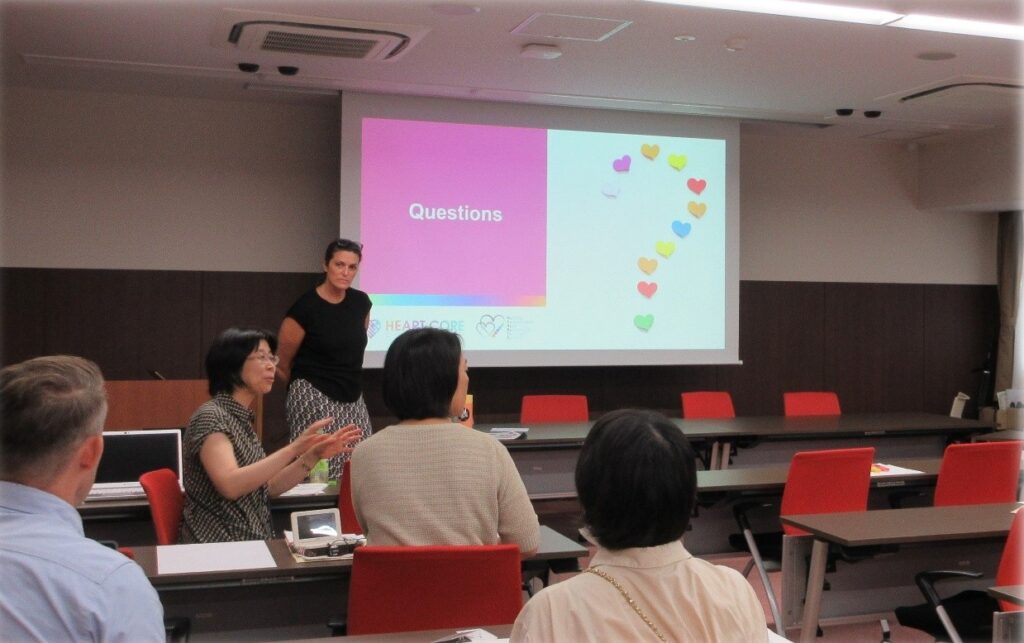
In his lecture on the 21st, he explained the HEARTS program while taking into account the educational background in the U.S. In addition, in the workshop on the 23rd, teachers were given the opportunity to actually experience work on applying the principles of HEARTS to the educational field.
Over the two days, participants exchanged diverse opinions on topics such as the significance and potential of promoting "trauma-informed schools" that transcend the differences in educational culture between Japan and the United States, the nature of systems to support children, how teachers should speak to students, and how to proceed with teacher training. This workshop was a meaningful opportunity to deeply consider the nature of education that is considerate of the diverse challenges children face.