In the medical field, there are quite a few "preventable deaths" where patients cannot be saved in time due to a lack of staff or excessive workload. To solve this problem, Naoki Okada, who is currently enrolled in a doctoral program at the Graduate School of Informatics at Kyoto University and works as an emergency physician at the Osaka Acute and General Medical Center, has begun an initiative to reduce the burden on doctors. The project he is working on as co-representative at SMBC Kyoto University Studio is called "Social implementation of a domestic medical-specific language AI model optimized for Japanese clinical practice" We spoke to him about the situation he had felt was an issue since his days as a medical intern and the clues he found to solve it.
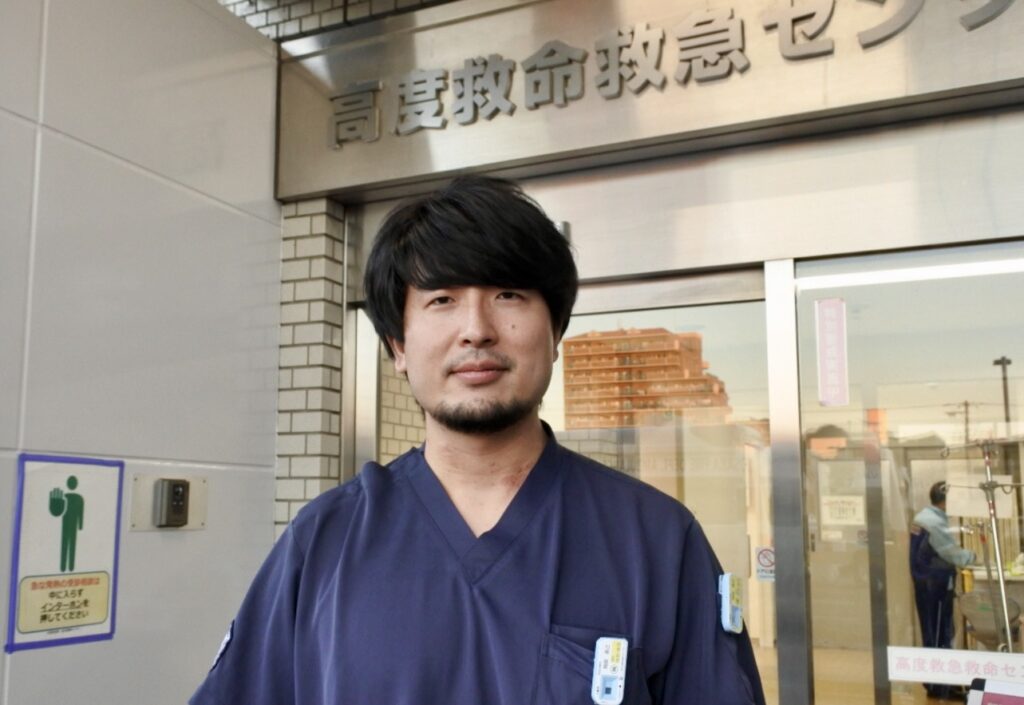
After the surgery, I prepared some paperwork in the middle of the night.
Our working hours as doctors are until 5pm, but our medical practice doesn't end at that time, and we often work until 8pm or 9pm. After our medical practice is over, we prepare the paperwork.
For example, say there is a patient who was brought in after a traffic accident and was hospitalized after surgery. What was their medical history, where were they injured in the accident, and how much blood did they lose? What treatment was given, how advanced was their anemia, and how many blood transfusions were given? How effective were they? If the patient was hospitalized for two months, you would need to record the patient's daily progress, treatment, and results for 60 days.
The data is not stored in a single file, so we have to open each file one by one and manually enter the values. Some hospitals have a person in charge of preparing the paperwork, but at the Osaka General Medical Center, a public hospital, the doctors do it.
It would be nice if we could do it in between medical work, but there are no "breaks" in medical practice. That's why everyone has to start preparing documents around 9pm when work is over. If there is a surgery at night, it may extend into the next day, so in that case, we sometimes give up on going home and work until the morning. We have no choice but to give up on many things and come up with unusual solutions.
I want to eliminate "preventable deaths"
Ever since I was a resident, I have felt that I wanted to do something about this situation. I work as hard as I can, but my physical strength is still steadily worn down. Treating patients when they are in their best condition is completely different from treating patients when they are not. We must absolutely avoid situations where a patient is brought in when we are at our limit, and a moment's delay in making a quick decision results in the patient dying.
In recent years, there have been quite a few "preventable deaths" occurring in medical settings, but the reason for this is not only a shortage of personnel; in some cases, it occurs because medical professionals are overburdened with work. In order to make medical care sustainable with limited personnel, digital transformation (DX) using information technology is essential.
Believing that doctors' survival rates could be improved if we could eliminate the troubles they face every day, I started a business with an engineer friend in 2020. Our company's mission is to "eliminate preventable death by using technologies," and we developed the image diagnostic AI "ERATS" and the medical documentation support AI "CartAI." ERATS uses AI to analyze patients' CT images to identify areas of injury, while CartAI aggregates important information from all medical records within the hospital and outputs documents such as referral letters and discharge summaries. I myself felt the need to deepen my understanding of AI and informatics beyond the knowledge I had gained in the field and through personal research, so in 2023 I entered the doctoral program at the Graduate School of Informatics at Kyoto University.
In recent years, the aging of the medical community has led to an increase in elderly patients. Many elderly patients suffer from multiple illnesses, making the creation of medical documents such as detailed symptom descriptions and referral letters more complex, difficult, and time-consuming. In this project, we will develop a language AI model based on CartAI to support the creation of detailed symptom descriptions for emergency situations involving elderly patients, with the aim of expanding this model to other medical documents and other medical departments.
For elderly patients, it is important to provide appropriate ongoing treatment, rehabilitation, and nursing care after they are discharged from the hospital. However, some patients say, "I don't have a home," or "I have no one at home, so I want to be cared for at the hospital." While hospitals need to discharge patients, if the nursing care side were to take on all the responsibility, the nursing care system would collapse.
There are many things that need to be resolved, but first I would like to optimize the work in my own area and then gradually expand the scope of my involvement.
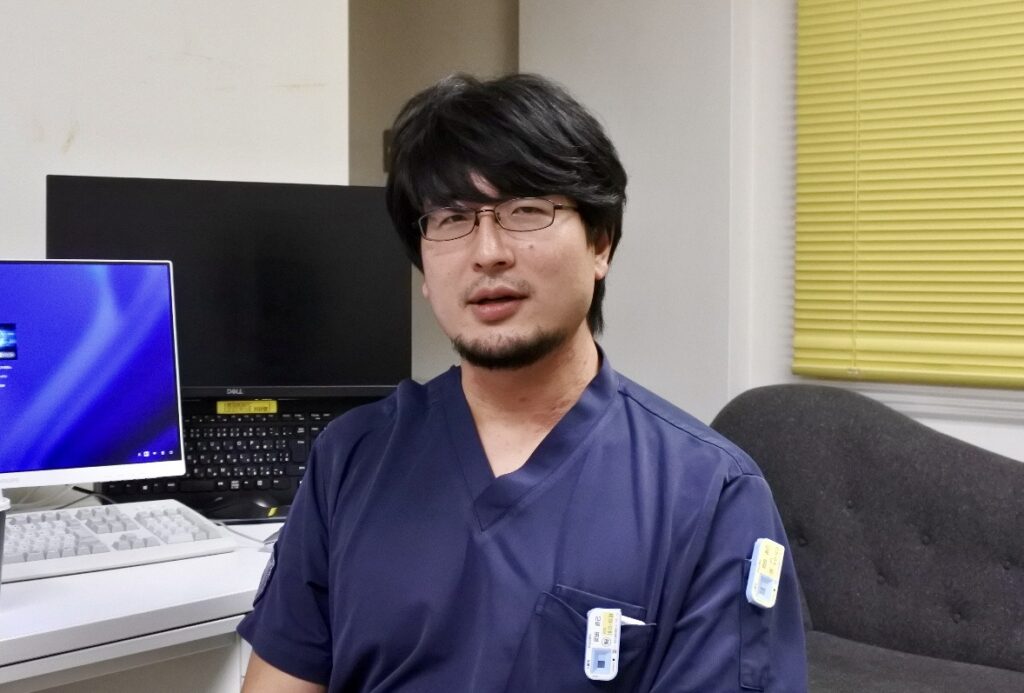
I want to be a doctor that people want to see.
Once the language AI model we are currently trying to create is completed, document creation that sometimes takes three hours will be possible in about five minutes. We are aiming to make it versatile, so if it can be useful at this hospital, it will surely be useful at other medical institutions as well. Once it is completed, we would like to expand its scope. In this project, we are working with the Japan Research InstituteDai SaikiWe are working with them, so it is reassuring to have a partner who is motivated to spread the word.
I want to be a doctor of such high quality that people would think, "If I were a patient, I would want to be examined by me," and I want to create an environment where people can continue working into their 40s and 50s. When document creation can be left to AI, I would like to have time to rest and read books. I think there are doctors who would like to try research if they had the time, and I think the positive effects of that kind of freedom would be huge. Doctors can fully utilize their true abilities and continue to take on challenges not only in clinical practice but also in research. That is the kind of world I would like to see.