A wide variety of research is conducted at universities every day. If the results of this research are disseminated to society, it has the potential to bring about major changes in the world.CO that utilizes enzymes and can be used by anyone, anywhere2Development and implementation of resource recycling technologyWe spoke with Kenji Noda, a researcher at the Japan Research Institute's Center for Emergence Strategy, who is working on the "" project.
Creating a framework for disseminating research to society
Professor Song He has developed a method to produce CO2 with extremely low energy consumption by using enzymes.2I find it fascinating that you are researching "biomassing," which has the potential to convert biomass into useful substances. New technologies like these are necessary to create a society that is not overly dependent on fossil fuels.
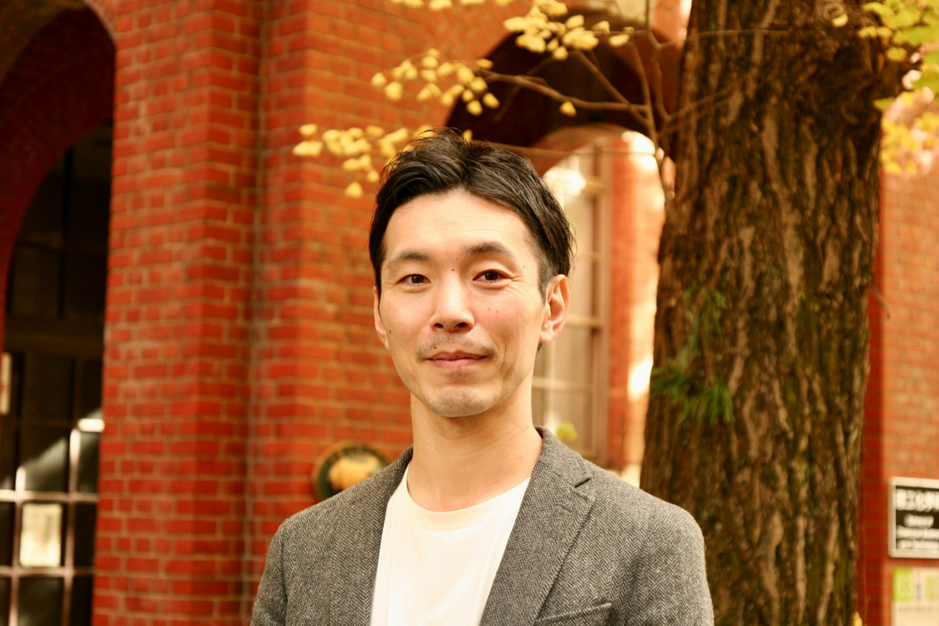
The Center for Emergence Strategy, where I work, is a department that creates solutions to problems by envisioning a desirable society and creating and managing a forum for co-creation with various parties from industry, government, academia, and the public. My role in this initiative is to first understand the characteristics of the technology and the ideas of the professors. Then, after sorting out where the technology can be used, I search for people and companies with whom we can potentially collaborate and form a team to create a framework for social implementation.
Even if research is socially valuable, it may not fit well with the economic system or may require investment for a while. In such cases, support and rule-making from the government or government ministries is necessary. In this project, we hope to change the structure of material circulation by collaborating with various companies and local governments.
The importance of bridging the gap between industry, academia, and government
Ever since I was a child, I have loved squid and other marine creatures. At university, I was captivated by the power of research, and after graduating from graduate school, I joined a cosmetics company as a researcher. I noticed something while interacting with many researchers: there are some who are doing very interesting research, but who are not able to communicate that interest to those around them. If management and others do not understand that the research is a valuable topic, it can be difficult to start or progress with the research, so I sometimes intervene to communicate this to them.
Universities and companies have different values and use different languages. That's why in industry-academia collaboration, translators and people-connectors are crucial to bridging the gap. However, in Japan, the gap between industry and academia is not being bridged sufficiently.
Ever since its founding, the United States has had a strong pragmatism, with the belief that "we will create new things on the frontier," and even applied research is conducted within universities. European universities have a strong orientation toward basic science, but they have established development research institutes in cooperation with companies. In contrast, in Japan, the gap between universities, which are highly oriented toward basic science, and companies has widened. These connections have changed dramatically thanks to various activities, such as regional collaborations between industry, government, academia, and the public, and support for startups, but I believe that we need to find a way of doing things that is unique to Japan, including these.
I want to liven up the university environment
After I started working for a company, I became interested in how organizations and society should be, and began working on creating research strategies, etc. While working, I enrolled in a correspondence university and studied philosophy, but at the time, I felt that "there are many problems that you only become aware of once you enter society, but university has become a place where only people in their 20s can study."
I feel like today's society is moving towards forcing everyone into a single standard. I think university is a place where each individual is respected and where you can express different opinions from others, and I also think it's important as a place where you can re-learn when you encounter a new problem. I also hope that through this project, universities can become more exciting places.
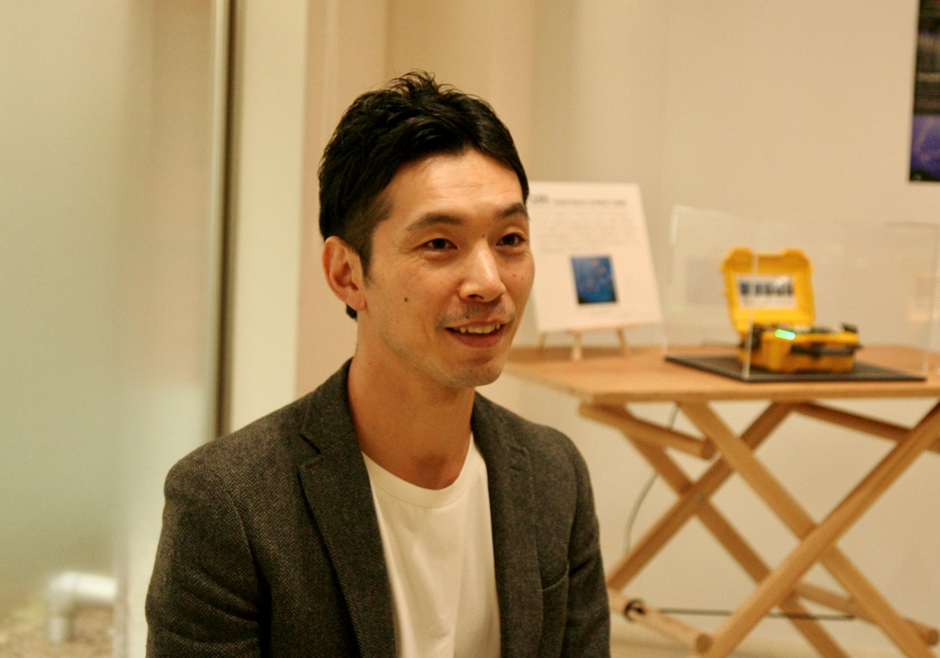
For a university to survive, it is of course necessary to advance research based on free ideas, but it also needs to explain that at least some of that research is meaningful and useful to society. However, it takes a great deal of time and money for university researchers to communicate this information to society and translate it into words. I hope that by people like me who play a central role and work to achieve this, universities can be maintained as places where diverse people can pursue research based on a variety of interests. I hope that by utilizing Professor Song's skills, the value of universities will increase, an environment will be created where researchers can immerse themselves in their research, and the next generation will become interested.
Recently, I feel like many people have experienced things like, "I started looking at social media and 30 minutes had passed, but it felt empty," or "I don't know what I'm working for." I think this is because we have become cogs in society, and our lives are dominated by consumption. I believe that university is a place not only to learn, but also to create new knowledge. If more diverse people than ever before participate in university, we will be able to break away from the consumer structure and create new values and things, and if we can learn to live on the premise that "there are various standards," I believe the world will become a more positive and enjoyable place.