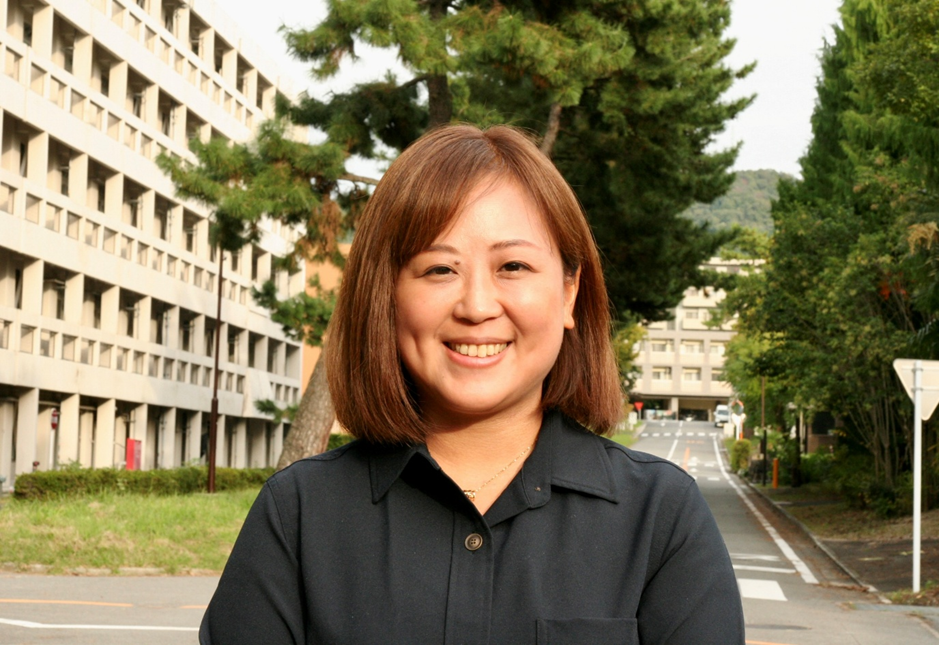
In Japan, many people sense the change of seasons when the cherry blossoms bloom or the first snow falls. This is supported by a monitoring system. However, compared to terrestrial environments, it seems that the monitoring system itself has not yet been fully established in marine areas. We spoke with Professor Shisako Matsuba of the Research Institute for Sustainable Humanosphere, Kyoto University, who is working on "Marine environment monitoring in collaboration with fishermen: Simultaneous solutions for efficient fishing and effective resource management."
The practice of "recording" that supports the protection and preservation of the natural environment
Conservation is not something that only people who love living things and nature should take on; I have always thought about what kind of systems are needed to protect nature, even if people don't normally live with conservation in mind. To do this, I believe we need to not only study the ecosystems and living things that are the target of conservation, but also think about how to design the systems of human society that relate to conservation. I think the reason behind this way of thinking is that, although I am currently involved in conservation research centered on ecology, I studied business science as an undergraduate, and have always been interested in the relationship between people and nature and in system design, rather than being a "naturalist who loves nature."
Data is one of the essential elements for scientifically supporting conservation. For example, in a paper we published in 2024 (*1), we developed a statistical model useful for conserving endangered vascular plant species by analyzing accumulated data going back nearly 40 years. There is much that can be learned and accomplished only by having long-term "records."
"The state of the ocean has changed due to the effects of climate change and environmental disturbance," is something we often hear from fishermen who are on the front lines of environmental issues. Fishermen read the changing ocean conditions on a daily basis and carry out their fishing activities while making full use of their past experience and sometimes technology such as fish finders. However, it feels like the changes in the modern marine environment are creating situations that are difficult to predict with past experience alone. Therefore, we believe that by collaborating with fishermen and researchers to quantitatively understand the ocean and combine this with scientific analysis, we can generate knowledge that will support on-site decision-making.
In particular, to properly grasp the long-term impacts of climate change, it is necessary to continue to keep records over a long period of time. However, in Japan, there are many situations where public support alone is not enough to establish a long-term monitoring system, and even in terrestrial environments where monitoring is relatively advanced, the number of subjects for observation, such as biological phenology, has decreased significantly.
To fill this gap, surveys and observations with the help of citizens are increasing year by year, contributing greatly to the accumulation of data. However, in the ocean, areas accessible to the general public are limited. Specialized institutions conduct observations in areas deeper than 200 meters, and visual observations are possible up to several tens of meters deep by diving. However, data is limited in many coastal areas between these depths, at around 40-100 meters, and these areas are often considered "gaps" in monitoring. While there is data on landings such as catch volumes by municipality and fishing port, much remains unknown about the actual state of the ocean.
Although coastal areas are environments where the impact of human activities such as fishing cannot be ignored, they are more difficult to access than land areas, and therefore observations are insufficient. Therefore, we wanted to start an experiment to use the power of machine eyes to make the underwater world, which is difficult for humans to reach, visible and to leave a long-term "record."
(*1) Matsuba, M., Fukasawa, K., Aoki, S., Akasaka, M., & Ishihama, F. (2024). Scalable phylogenetic Gaussian process models improve the detectability of environmental signals on local extinctions for many Red List species. Methods in Ecology and Evolution, 15, 756–768.
Aiming for sustainable fishing by combining empirical knowledge and data
Taking the fishing industry as an example, the impacts of environmental change and disturbance are already being reported in various places. Although fishing restrictions are being imposed on an increasing number of species, in the case of small-scale coastal fisheries, compared to distant-water and large-scale fisheries, there have been few cases to date where a single fishery has overexploited the entire resource. On the other hand, coastal resources are vulnerable and can fluctuate rapidly due to environmental changes and localized biases in catches.
Furthermore, even for species that have been the subject of resource assessments, assessments that systematically incorporate the impacts of environmental change and considerations based on future scenarios are insufficient. As observational data and on-site knowledge accumulate, it will become possible to link trends and risks, such as "Species A is at high risk of decline if the current environment continues, while Species B is likely to be relatively stable in this sea area," to environmental change and discuss them. I believe it is important to consider the future of fisheries from a long-term perspective, while sharing the possibility and uncertainty of such future changes.
For this project, we are conducting observations in collaboration with fishermen in Tsushima. Fishermen, who have been watching the sea for many years, are able to read the ocean conditions and use their past knowledge to work with us to determine where fish are likely to be found and where they are not, which is why we are able to carry out meaningful observations within limited time and budget. In that sense, I feel that ocean observations are only possible with the help of fishermen.
The researchers will not only analyze the data obtained, but also share the progress and results with fishermen through dialogue, with the aim of aligning it with on-site perceptions. Through this cycle, we hope to support both resource management and conservation, as well as efficient operations in terms of reducing wasted fuel and time, and contribute to sustainable fishing in a volatile environment.
I want to create an "underwater map"
One thing I found interesting recently while conducting observations in Tsushima was the underwater drone footage of a species that is said to have its northern limit in Tsushima. This species is attracting attention as its distribution range is expected to continue to change due to global warming. A fisherman said, "I've never caught one, but I knew it existed." I believe that being able to capture such species on video will make it easier to discuss how their northern limits will shift in conjunction with environmental changes.
I believe that monitoring is an activity that builds the foundation for the long-term use of a region's "natural infrastructure," that is, the natural environment, including the ocean and its living creatures. On land, it's easy to see what kind of environment unfolds before your eyes; a map reveals the detailed layout of roads, buildings, and green spaces, but the same is not yet true underwater. What kind of creatures live where, and what kind of undersea environment is there? This natural environment itself is part of the natural infrastructure that has long supported fishing and our lives. Continuously recording this information through monitoring and visualizing it as an "underwater map" also fosters fundamental ocean information that can be shared by the entire community -- a common asset. Having this ocean blueprint will enable various decision-making processes, such as resource management, disaster prevention, and tourism, to be based on both experience and data, turning these into regional strengths.
Unlike numerical data (such as counting organisms and recording their populations), video data has the potential to uncover new value in the future. For example, in this project, we are compiling data primarily on useful marine species, but the video also captures a variety of other biological species and the undersea topography. We hope that this video data will become even more valuable as it reaches a wider audience. It's especially important to keep records of changes as they occur, especially in today's world, where the environment is changing rapidly due to factors like climate change. Records cannot be retaken, so the sooner we start, the better, and there's much we can do now that technology has advanced. Underwater drones specialized for biological observation would expand the possibilities for observation, so we'd like to consider bringing in companies with strong technological development expertise.