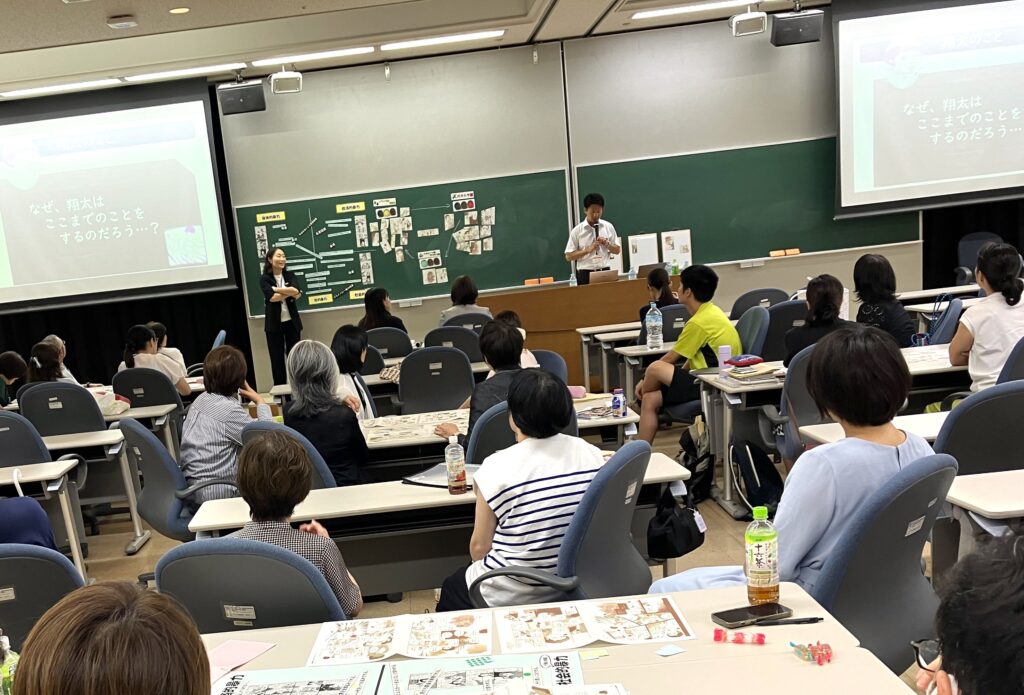
"Research, development and dissemination of educational approaches that overcome the cycle of poverty, inequality and abuse"Living Education," promoted by the "Living Education" project, was featured on NHK Educational TV in December 2025 (*1). NHK Chief Director Miki Inose, who produced the program, contributed a special article about the importance of "Living Education" and the voices of those on the ground that emerged from his interviews. Please read this article, which is full of hints for thinking about the future of education.
(*1)ETV Special "Education for Living" for You
(Redirects to NHK's website)
Introduction
Hello everyone. I was given the opportunity to write this article as I was in charge of a documentary program called "Education for Living for You" which was broadcast on ETV in December 2025. I would like to write about my encounter with "Education for Living," my motivation for making the program, and my impressions through the interviews.
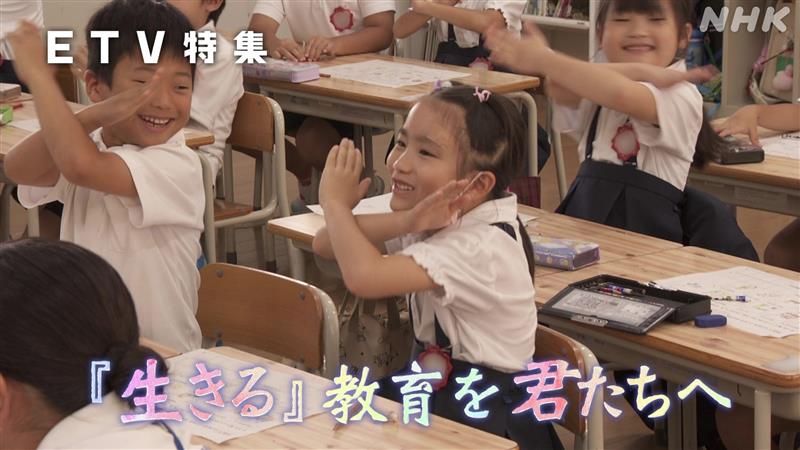
Encountering "Education for Living": Hope felt in a class that fosters the ability to receive support
I first learned about "Living Education" after reading an article by social worker Yukiko Tsuji in the book "Children's and Youth's Rights and Policies 1: Children's and Youth's Rights and the Children's Basic Act" (Akashi Shoten), edited by Professor Yoshi Suetomi of Nihon University. The article described the practice of "Living Education," in which children learn about their rights and acquire the skills to protect their minds and bodies. At the time, I had been making a series of documentaries on the theme of "abuse," and the keywords "children's rights" and "school" had caught my eye as my next topic. In September 2024, I visited Tajima Minami Elementary and Junior High School in Ikuno Ward, Osaka City, for the first time to see what classes were actually being held there and how children responded to them.
"Please feel free to observe any class you like!"
Principal Kiyohiko Imagaki welcomed us with a refreshing smile and, taking advantage of his words, we were able to watch nearly half of the lessons in the entire program, including "Private Zones" for first graders, "The Roots of Life" for second graders, "The Convention on the Rights of the Child" for third graders, "Hello Work for 10-Year-Olds" for fourth graders, "Dating Violence" for fifth graders, "Thinking about Family" for sixth graders, "The Mechanism of Emotional Wounds" for first graders, "The Brain, Mind, Body, and Me" for second graders, "Real Dating Violence" for second graders, and "Child Abuse" for third graders.
The first thing that made an impression on me was the way the children's eyes lit up in every class, raising their hands and eager to speak. They couldn't stop shouting, "Teacher, call on me!" and "I want to say something too!" As I watched, wondering how they were all able to express their opinions so clearly, I noticed that the "worksheets" they had been given were well-designed, with the first step being to write down "your own opinion" on the sheet. I felt that in every class, it was important to "put your thoughts into words," "communicate them verbally to your peers," and "engage in dialogue."
What struck me most was that all of the lessons over the nine years were designed to steadily equip the children with the ability to ask for help and receive support, which is essential for surviving the harsh real world. "When you're in trouble, it's okay to ask for help." The warm feelings and wishes of the teachers permeated every detail of the lessons. On my way home from the interview, I was filled with excitement, thinking, "This lesson is the real deal! I definitely want to make it into a TV program!", and my mind began to trace back memories from 10 years ago.
It's not easy to ask for help when you're in trouble - From an interview with a "baby hatch"
In the fall of 2014, I was at Jikei Hospital in Kumamoto, which operates Japan's only "baby post" (officially known as "Stork's Cradle"), negotiating with then-director Dr. Hasuda Taiji to film a documentary. My proposal was to do a long-term follow-up on the "SOS Pregnancy Counseling (free telephone counseling)" that the hospital has been running 24 hours a day, 365 days a year since "Stork's Cradle" opened. The aim was to convey the true story of women struggling with "unplanned pregnancies." After carefully negotiating with the hospital to protect privacy, the "door to filming" was opened.
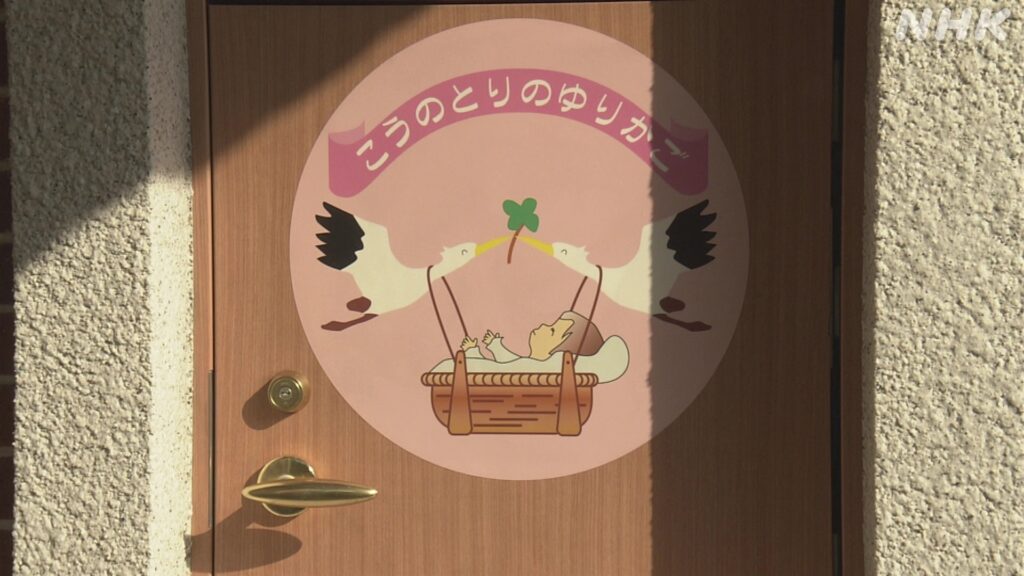
The program was broadcast in May 2015 as an ETV special entitled "The Baton of Tiny Lives."
During our six months of close coverage, we heard a variety of SOS calls. Teenage pregnancies, pregnancies resulting from sexual violence or incest, and women struggling with poverty. In the eight years since the service opened, the number of consultations received from across the country had reached over 9,000 (at the time of the interview). We were overwhelmed by the number of people who felt isolated, with no one or place to turn to for advice. One teenage woman said, "I loved my mother, so I couldn't tell her I was pregnant." We also covered a case in which a woman was unable to reach the phone counseling service and gave birth alone at home without being able to tell anyone about her pregnancy, resulting in the death of her baby, leading to the mother being arrested.
Dr. Hasuda Taiji said, "People who have been bullied or discriminated against for a long time are unable to speak out. I have often felt a strong sense of wonder, why they couldn't tell their friends or their parents. I think we need to encourage people to seek advice, to prevent women from giving birth at home in isolation."
Why is it that those who need support are the ones who are least able to ask for help or seek advice?
Even after the show finished airing, I was still left with a lot of homework to do.
★ETV Special "The Baton of Little Life"
⇒NHK Teachers' Library lends program DVDs free of charge to educational institutions.
The homepage isHere(Redirects to NHK's website)
The meaning of children learning about their rights: "I am an important person who needs to be protected, so I can ask for advice"
Ten years have passed since I covered the "baby hatch." I witnessed a lesson on "life education" that was carefully designed from the child's perspective, andThe fact that we have not learned how to ask for advice or helpI was reminded of this fact once again. I now want to share this lesson as one answer to create a society where anyone can ask for help.
For this reason, the ETV special "Education for Living for You" decided to center the program on a lesson called "Hello Work for 10-Year-Olds," in which fourth graders are encouraged to "look at themselves and discuss their worries." Another thing that we thought was important was a lesson on the "Convention on the Rights of the Child" for third graders. It has been over 30 years since Japan ratified the United Nations Convention on the Rights of the Child in 1994, but even today, most elementary schools do not teach about "children's rights."
Tajima Minami Elementary and Junior High School has developed its own eight-hour lesson plan. Rather than simply lectures, students use cards like in a game and engage in discussions with their friends, ingraining rights in their minds and bodies. Children are proud as they learn that they are protected by 40 articles of the Constitution. By acquiring various rights, such as the right to live and grow, the right to be protected from all violence, and the right to express their opinions, children are encouraged by the realization that they are important beings who deserve to be protected.
"I realized it's okay to talk about my worries," "I felt somehow better after someone listened to my worries," "My friends were worrying about the same things as me." We were able to capture many of these "small success stories" on video. However, when it came to "serious worries" that could not be resolved through dialogue between children alone, Teacher Misako Bessho, who is in charge of "Education for Living," and her homeroom teacher conducted individual interviews and connected them to support parents, etc. The experience of "having an adult help me when I talked to them" is very important.
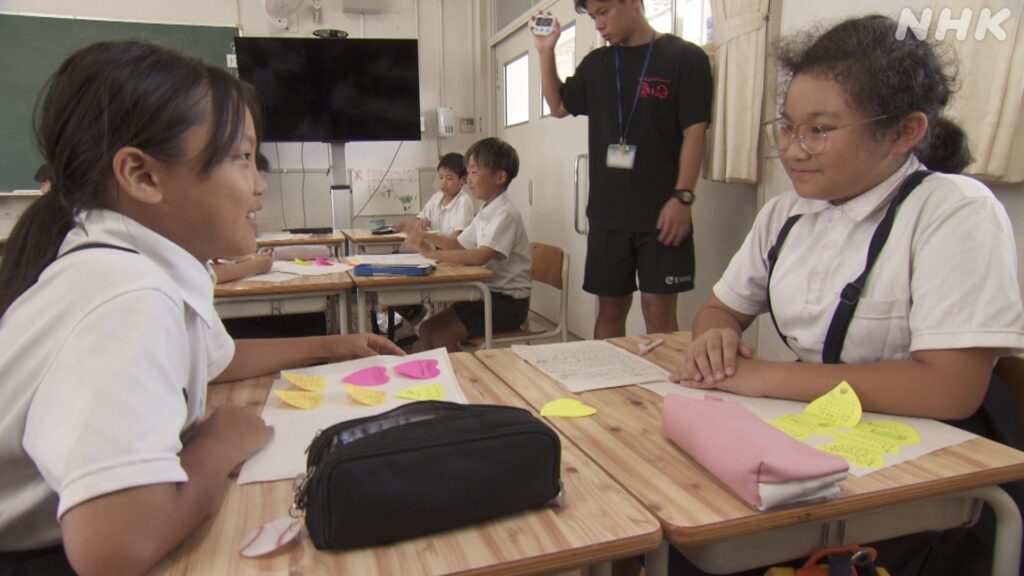
"Living Education" is Spreading: Voices of Teachers in the Field
The "Living Education" that was born at Tajima Minami Elementary and Junior High School is gradually spreading to other schools that are also facing the challenges facing children.
Shinomiya Elementary School in Kadoma City, Osaka, began implementing "Living Education" in 2025, offering lessons such as "Private Zones" for first-graders, "Convention on the Rights of the Child" for third-graders, and "Let's Think About Everyone's Irregularities - Disability Awareness Education" for fourth-graders. The initiative was prompted by an increase in reports of violence and bullying within the school. Teachers were exploring the causes and the skills they needed to develop, and this led them to "Living Education." Teacher Nobuo Teramoto said, "I was concerned that children were reluctant to show their weaknesses and were unable to ask for help." Therefore, Shinomiya Elementary School is working to create a safe and secure school by combining student guidance that values dialogue with children with "Living Education." "I believe that in order to create a cycle where students feel like they can come back and try again when they are in trouble or fail, it is first necessary to provide a good environment," said teacher Teramoto.
Kyoto Municipal Kyoto Sowa High School is a part-time general education high school that actively accepts students who have a history of school refusal or developmental characteristics and wish to "restart their studies." Currently, the school is incorporating lessons on the "Convention on the Rights of the Child" into its "Education for Living" program. Teacher Shoichi Inoue, who is at the center of this program, has felt that the "difficulty in living" that students experience can sometimes be influenced by difficult home environments, such as abuse and neglect. Inoue says, "By teaching children's rights, the school will do its utmost to convey that 'you have a place here.' I want to create a place where students can feel that 'it's okay for me to belong here."
E. FORUM, run by the Kyoto University Graduate School of Education, supports these struggling teachers across the country and plays a vital role in connecting their networks. They also held a training seminar on "Education for Living," which we are grateful for as it provided a valuable learning opportunity for us in producing the program. We were able to enjoy engaging lectures by experts, including Professor Satoshi Nishizawa of Yamanashi Prefectural University Graduate School, a leading expert on the issue of child abuse, and lively mock lessons by teachers from Tajima Minami Elementary and Junior High School. We were also encouraged by the sight of the teachers gathering at the training seminar, even on the weekend, eagerly taking notes and engaging in discussions.
An 89-minute documentary will be broadcast!
Finally, an announcement.
After the ETV special aired, we received positive feedback from people involved in education across the country, with comments such as, "It was a practice that I hope spreads nationwide," and "I could sense the sincerity and determination of the teachers who are involved." A new 89-minute version will be produced. It will be broadcast on Sunday afternoons. We hope that children and parents alike will tune in.
| Program name:"To you, the strength to live" Broadcast date: Sunday, March 1st, 15:30-16:59 (89 minutes) [NHK Educational TV: Nationwide broadcast] Simultaneous streaming on NHK ONE and catch-up streaming for one week. After that, it will also be available on NHK On Demand. Homepage:https://www.web.nhk/tv/pl/series-tep-LPPYYZ8J8W |